Initiatives by the Japanese Government
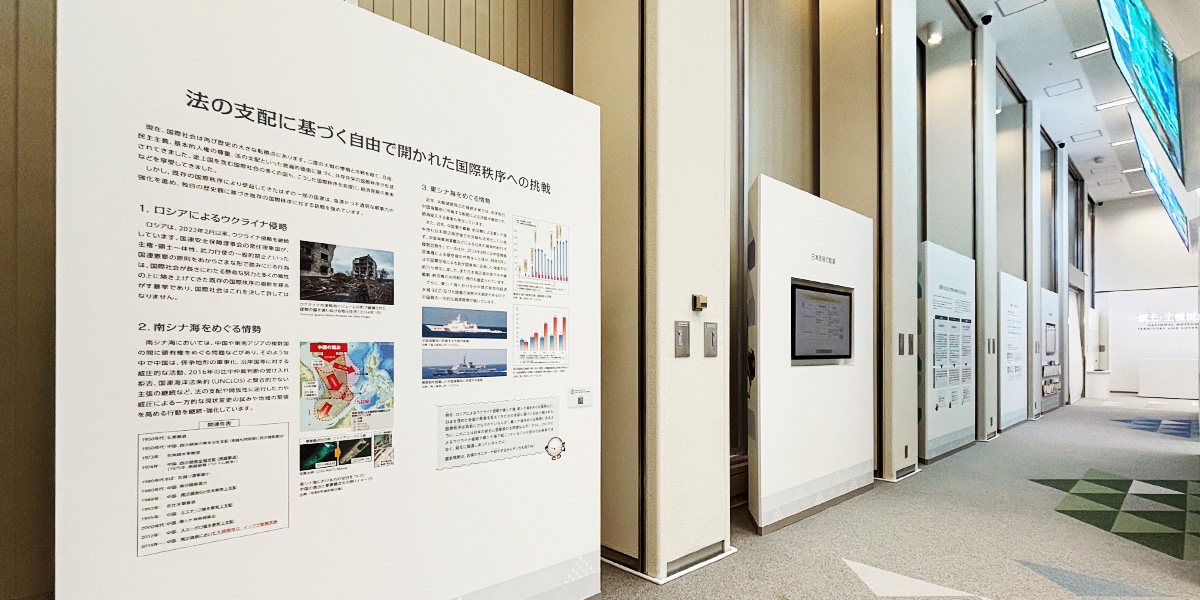
In the midst of increasingly severe international circumstances, this section introduces the Japanese government's efforts and policies to maintain and strengthen a free and open international order based on the rule of law.
Challenge to the Free and Open International Order based on the Rule of Law
The international community is currently at a major turning point in history. After the
devastation of the two World Wars and the Cold War, the international community has formed an order of
coexistence and coprosperity upholding universal values such as freedom, democracy, respect for
fundamental human rights, and the rule of law. Numerous countries around the world, including developing
countries, have also enjoyed the fruits of international peace, stability, and economic development in
this globalized world rooted in such an order.
However, some states that have surely benefited from the existing international order are strengthening
their military power in a rapid and non-transparent manner, becoming more assertive, and challenging the
existing international order based on their own historical views.
1. Russia's Aggression against Ukraine
Russia has been continuing its aggression against Ukraine since February 2022. A permanent member of the UN Security Council blatantly violating the principles of the UN Charter, such as sovereignty, territorial integrity, and the general prohibition of the use of force, is an outrageous act that shakes the very foundation of the existing international order, which the international community has built up over a long period of hard work and much sacrifice. The international community must not allow such an act.
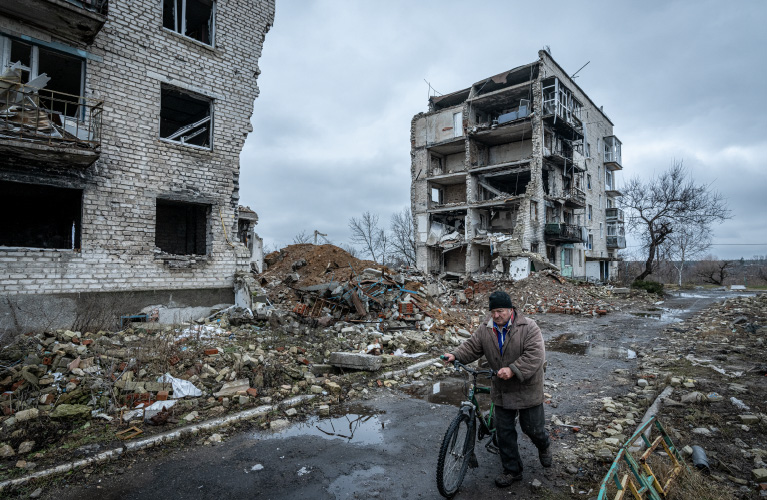
Photo by Ignacio Marin/Anadolu via Getty Images
2. The Situation in the South China Sea
In the South China Sea, there are territorial disputes between China and several Southeast Asian countries. China has been continuing and intensifying its unilateral attempts to change the status quo by force or coercion, which goes against the rule of law and openness, as well as its actions to increase regional tensions. Such activities include militarization of disputed features, coercive actions against coastal States, refusal to accept the 2016 Arbitral Tribunal’s award to the Philippines and China, and continuously making claims that are inconsistent with the United Nations Convention on the Law of the Sea (UNCLOS).
Related Chronological Table
| 1950’s: | Withdrawal of French Armed Forces |
| 1950’s: | China controlled the eastern half of Paracel Islands (South Vietnam also advanced to the islands in that same period) |
| 1973: | U.S. forces withdrew from South Vietnam |
| 1974: | China cleared the Paracel Islands of South Vietnam and controlled whole islands. (1975: Collapse of South Vietnam as a result of the Vietnam War.) |
| Mid 1980s: | A scale-down of Soviet troops in Vietnam |
| 1980s: | China advanced to the Spratly Islands |
| 1988: | China practically controlled six locations in the Spratly Islands. |
| 1992: | Withdrawal of U.S. troops from the Philippines |
| 1995: | China practically controlled Mischief Reef |
| 2000s: | China advanced to the Southern South China Sea. |
| 2012: | China practically controlled the Scarborough Shoal. |
| From 2014 on: | China has implemented large-scale land reclamation and infrastructure building in the Spratly Islands |
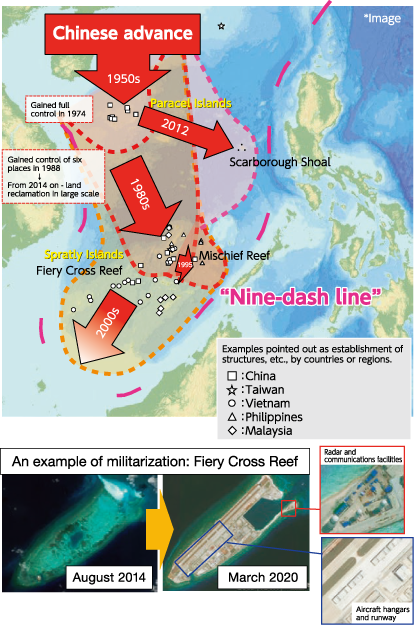
Source:DEFENSE OF JAPAN 2024
3. The Situation in the East China Sea
In recent years, activities by China Coast Guard vessels have been identified almost every day in
Japan’s contiguous zone around the Senkaku Islands, and intrusions into Japan’s territorial sea have
also been occurring.
Chinese naval vessels and aircraft have also been increasing their activities in the sea and airspace
around Japan, including in the East China Sea. In 2023, Japan confirmed multiple instances in which
Chinese People's Liberation Army Navy (PLAN) survey ships navigated Japanese territorial sea. In
August 2024, a Chinese military reconnaissance plane intruded into Japan’s territorial airspace. In
September of the same year, a PLAN aircraft carrier also sailed in waters close to Japanese
territorial seas. In addition, joint navigation and flights by Chinese and Russian ships and aircraft
have been confirmed in the sea and airspace around Japan. China has been continuing its unilateral
activities to develop natural resources while the exclusive economic zone (EEZ) and the continental
shelf between Japan and China in the East China Sea remain pending delimitation.
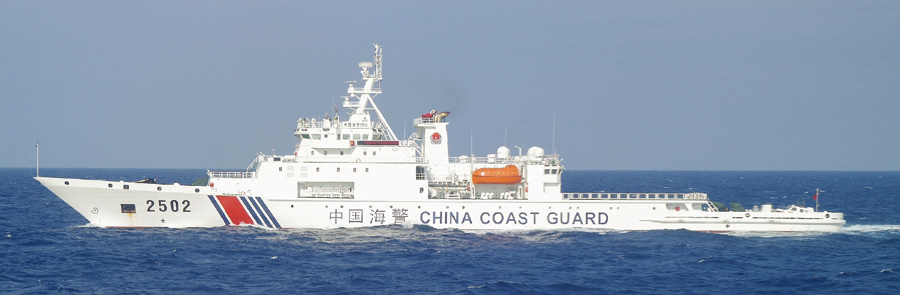
Souce : Japan Coast Guard Annual Report 2024
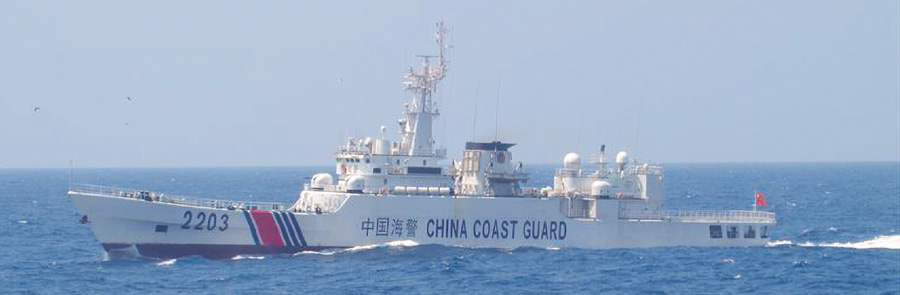
Souce : Japan Coast Guard Annual Report 2024
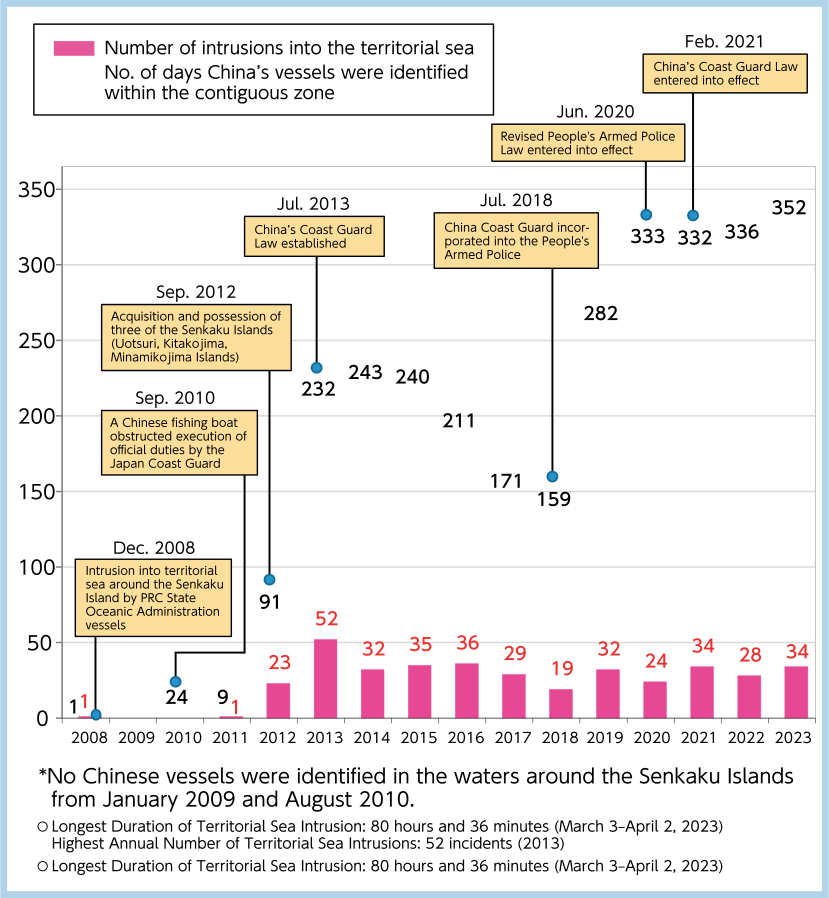
Souce : Japan Coast Guard Annual Report 2024
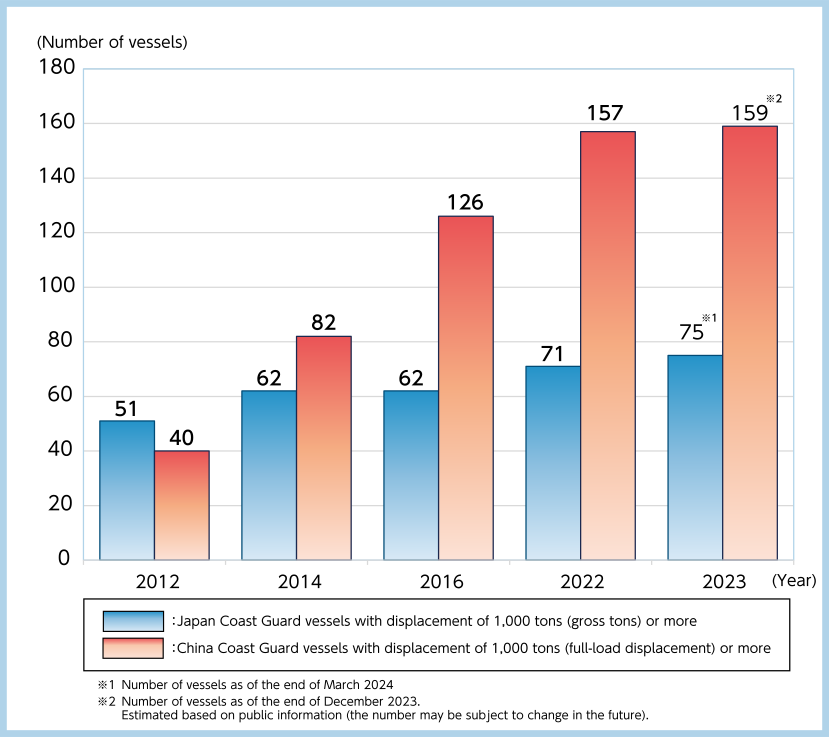
(Increasing Tension in Waters Surrounding the Senkaku Islands)
▶Increases in the size of the fleet and the size/armament of vessels belonging to the China Coast Guard,etc.
Souce : Japan Coast Guard Annual Report 2024
At the moment, the free and open international order based on the rule of law that has supported the development of countries including Japan is being challenged by events such as Russia's aggression against Ukraine and the situation in the East China Sea and South China Sea! As we can see in the situation in the East China Sea, this is a matter that directly concerns Japan's security! Furthermore, events around the world such as Russia's aggression against Ukraine and what is happening in the South China Sea are not separate events, but are interconnected!

Japan’s Position that Respects Law and Order in the International Community
The Northern Territories and Takeshima are parts of Japan’s territory. However, in
reality, Japan is not able to exercise a part of its jurisdiction therein.
The Senkaku Islands are part of Japan’s territory. The Senkaku Islands are under the valid control of
Japan and there exists no issue of territorial sovereignty to be resolved concerning the Senkaku Islands.
However, the situations in the maritime areas surrounding the islands have become complex.
Amid the Russia's aggression against Ukraine, which is shaking the very foundations of the current
international order, Japan is determined to uphold and reinforce the free and open international order
based on the rule of law by taking action based on rules, such as peaceful resolution of disputes, and
encouraging other countries to do the same.
Japan has responded to various situations pertaining to its territory and sovereignty in an appropriate
manner and in line with the nature of each situation, based on a policy of acting calmly and firmly to
protect Japan's territory as well as territorial sea and airspace, while respecting law and order in the
international community.
The Northern Territories
Nature of the Situation
Territorial issue exists.
Background to date
Almost 70 years have passed since the resumption of diplomatic relations through the conclusion of
the Japan-Soviet Union Joint Declaration in 1956. The Japanese Government persistently engaged in
negotiations with the Soviet Union and Russia, consistently upholding its basic policy of
establishing stable relations based on genuine mutual understanding with its important neighbor, the
Soviet Union and Russia, by concluding a peace treaty through the resolution of the greatest issue
of concern between Japan and Russia, namely the Northern Territories issue.
However, the Government of Russia, using the measures taken by Japan in relation to Russia's
aggression against Ukraine as an excuse, announced measures such as discontinuing negotiations on a
peace treaty, suspending the Four-Island Exchange Program and free visits, and withdrawing from the
dialogue on joint economic activities on the Four Northern Islands.
Japan’s response
Although Japan-Russia relations are in a difficult situation due to Russia's aggression against Ukraine, the Japanese Government will firmly maintain its policy of concluding a peace treaty through the resolution of the territorial issue.
The territorial issue with Russia has not been resolved since the end of WWII.

Takeshima
Nature of the Situation
Territorial issue exists.
Background to date
Takeshima is an inherent territory of Japan. As seen in the drafting history of the San Francisco
Peace Treaty, it is clear that Japan retains Takeshima under the treaty. However, from 1953 to 1954,
the Republic of Korea (ROK) illegally occupied Takeshima by physical force, including firing on
Japan’s patrol vessels.
Japan and the ROK expressed their respective claims to each other via diplomatic notes in the 1950s
and 1960s. Takeshima has remained illegally occupied by the ROK up until the present day.
With no bilateral solution forthcoming, Japan proposed to the ROK to refer the case to the
International Court of Justice in 1954, 1962 and 2012.
The ROK has continually rejected these proposals.
Japan’s response
Any measures or actions the ROK takes regarding Takeshima based on illegal occupation have no legal justification under international law. The Japanese Government will respond firmly with the determination to resolutely defend Japan's territory as well as territorial sea and airspace.
So, the ROK has rejected referring the case to the ICJ. Japan is trying to resolve the issue in accordance with international law, but the ROK is deliberately ignoring it?

The Senkaku Islands
Nature of the Situation
There exists no issue of territorial sovereignty to be resolved.
Background to date
Although the Chinese Government did not contest Japan’s sovereignty over the Senkaku Islands for
approximately 75 years, in December 1971, it suddenly began claiming that China has historically
held the Senkaku Islands since the Ming Dynasty.
China’s claims are based on its own interpretation of the relevant facts and laws and are not
supported by any grounds based on international law.
China Coast Guard vessels have repeatedly intruded into Japan’s territorial seas around the Senkaku
Islands. The frequency of the intrusions has sharply risen since 2012. China is maintaining and
strengthening its unilateral attempts to change the status quo by force.
Japan’s response
In response to attempts to unilaterally change the status quo by force, the Japanese Government has responded firmly and calmly based on its policy of resolutely protecting Japan's land, sea, and airspace. At the same time, the Government has urged China to act with respect for the law and order of the international community and has explained the situation to the rest of the international community to gain understanding.
For about 75 years, China did not raise any objections about the Senkaku Islands being Japanese territory, but then suddenly claimed that they had been its territory for hundreds of years!
Finally―Let’s think about it
1. Cases in which territorial disputes were resolved in international courts
There have been many cases where inter-state disputes over territories were peacefully resolved in international courts and tribunals in accordance with international law.
| Year of Judgment | Case name | Court (basis of referral) | Parties | Judgment |
|---|---|---|---|---|
| 1928 | Island of Palmas Case | Arbitral Tribunal | Netherlands v. USA | Belongs to the Netherlands |
| 1931 | Clipperton Island Case | Arbitral Tribunal | France v. Mexico | Belongs to France |
| 1933 | Legal Status of Eastern Greenland Case | Permanent Court of International Justice (Optional Clause) | Denmark v. Norway | Belongs to Denmark |
| 1953 | Minquiers and Ecrehos Case | International Court of Justice (Special Agreement) | United Kingdom/France | Belongs to the United Kingdom |
| 2002 | Case concerning Sovereignty over Pulau Ligitan and Pulau Sipadan | International Court of Justice (Special Agreement) | Indonesia/Malaysia | Belongs to Malaysia |
| 2008 | Case concerning Sovereignty over Pedra Branca/Pulau Batu Puteh, Middle Rocks and South Ledge | International Court of Justice (Special Agreement) | Malaysia/Singapore | Belongs to Singapore (Middle Rocks belongs to Malaysia) |
2. Three points to bear in mind when considering evidentiary materials
When states make conflicting territorial claims, many forms of evidence are presented to prove that their claims are correct. Here are some points to bear in mind when examining those materials.
POINT1 Validity of the materials
Can the contents of the material be considered as valid evidence in international courts?
Although circumstances are unique to individual cases, the aspects (right) can be drawn from legal precedents.
〇 Contents of materials that can be considered as valid evidence:
<Examples>
Anything that indicates effective control, e.g. taxation, land registration, establishment of related
legislations, regulations on hunting and fishing, establishment of natural protected areas,
regulations on border control, activities of individuals permitted by the authorities.
× Contents of materials that are unlikely to be accepted Nature of as valid evidence:
- The island of concern is indicated on a map in an ancient document of
the country.
- The island of concern is physically visible from a territory of the country.
- The color of the sea changes from beyond the island of concern.
- A high-ranking official passed nearby the island of concern.
POINT2 Credibility of the contents set out in the materials
Is the material based on accurate information?
In some cases, the materials may include content that is based on oral histories or ancient myths, or not based in fact, such as measurement errors. For instance, some maps of the Sea of Japan made in the late Edo Period or the early Meiji Period depict an imaginary island known as Argonaut. It is necessary to be particulaly careful when dealing with ancient documents.
POINT3 Accuracy of the interpretation of the materials
Are the arguments relying on the evidentiary material based on an accurate interpretation?
In some cases, there may be a weak causal relationship between the content of the materials and the conclusion being drawn in the argument, or the interpretation of the materials in the argument is not appropriate when put in the full context or compared with other related materials. In particular, the interpretation of ancient maps and documents tends to be difficult, and views of experts can sometimes be split.